
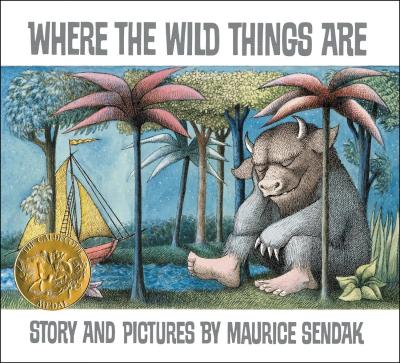
Maurice Sendak’s “Where the Wild Things Are” is more than just a picture book—it’s a revolutionary exploration of childhood emotion, imagination, and the complex inner world of a young mind. First published in 1963, this landmark work has become a cornerstone of children’s literature, challenging traditional narratives about childhood by presenting a nuanced, honest portrayal of a child’s emotional landscape.
The story follows Max, a spirited young boy dressed in a wolf costume, who is sent to bed without supper after displaying unruly behavior. What follows is a breathtaking transformation of his bedroom into a wild, mysterious forest, where Max sails “through night and day and in and out of weeks” to a land inhabited by enormous, fantastical creatures. Sendak’s genius lies in how he treats Max’s emotional journey with profound respect. Unlike many children’s books of its time, “Where the Wild Things Are” doesn’t moralize or diminish the intensity of childhood feelings. Instead, it validates them, showing that anger, frustration, and imagination are natural and powerful experiences.
Visually, the book is a masterpiece of storytelling through illustration. Sendak’s distinctive style—with its rich, textured drawings and carefully modulated color palette—captures both the wildness and tenderness of Max’s adventure. The illustrations progressively transform, mirroring Max’s emotional state: his bedroom gradually dissolves into a mystical landscape, the Wild Things emerge with their magnificent, slightly menacing forms, and then the scene subtly shifts back to his room. Each page is meticulously composed, inviting readers to explore the nuanced emotional terrain of the narrative. The Wild Things themselves are extraordinary creations—simultaneously frightening and endearing, with their enormous bodies, expressive faces, and vulnerable demeanors.
The book’s most profound message is perhaps its exploration of emotional regulation and the power of imagination. When Max becomes the “king of all wild things” and eventually feels lonely, he chooses to return home, where he finds “his supper waiting and it was still hot.” This moment is revolutionary—it suggests that difficult emotions can be navigated, that one can journey through anger and wildness and still find love and comfort. Sendak understood that children are complex beings capable of processing sophisticated emotional experiences, long before such ideas became mainstream in children’s literature.
“Where the Wild Things Are” remains a transformative work that speaks to generations of children and adults alike. Its enduring appeal lies in its profound respect for childhood’s inner world—messy, intense, imaginative, and fundamentally beautiful. Sendak created more than a story; he crafted a timeless exploration of how children process emotions, navigate their inner landscapes, and ultimately find their way back to love and security. It is a book that doesn’t just tell a story but honors the rich, complicated emotional lives of children.
Questions to ask while reading:
- How do you think Max feels when his mother sends him to his room?
- Do you think a forest really grew in Max's room?
- Do you think the wild things are real?